Good Intentions, Quiet Compromises, and the Person You’re Becoming
Tori Thomas
2/12/20266 min read




I Keep Thinking About the Moment We Stop Recognizing Ourselves.
There’s a particular kind of fear that doesn’t come from villains.
It comes from regular people.
People who started out tender. Hungry, maybe. Hopeful. People who wanted to climb out of struggle and build something better. People who wanted to be respected, stable, safe. People who made early choices that were born from innocence, survival, or even a sincere desire to do right.
And then somewhere along the line… something shifts.
Not always dramatically. Not always with a big scandal or a headline or a moment where everyone clutches their pearls.
Sometimes it’s quieter than that.
It’s the slow drift. The subtle adjustments. The little compromises we call “necessary.” The justifications that start to sound like wisdom because we’ve repeated them enough.
And one day you look up and realize: ‘I’ve become the thing I swore I’d never be.’
That thought messes with me. Because it means the issue isn’t just “bad intentions.” The issue is what happens to our intentions over time.
The Truth Is… Intentions Don’t Stay Untouched
I used to think intentions were like a clean starting line. Like if you begin with the right heart, you’ll end with the right heart.
But life doesn’t work like that.
Life introduces pressure. Influence. Trauma. Reward. Applause. Scarcity. Fear. Power. Disappointment. The need to prove yourself. The ache of not wanting to go back to where you started.
And if we’re not careful, those things don’t just affect what we do.
They affect who we Become while we do it.
That’s the part that scares me.
Because we don’t wake up and say, “Today I’d like to become greedy.” We don’t put “corruption” on our vision board.
We just start making choices that protect us. Choices that get results. Choices that keep us from feeling small again.
And eventually, we confuse “I can” with “I should.”
What Are We Using to Decide What’s “Right”?
This is where I get stuck, and I’m guessing I’m not alone.
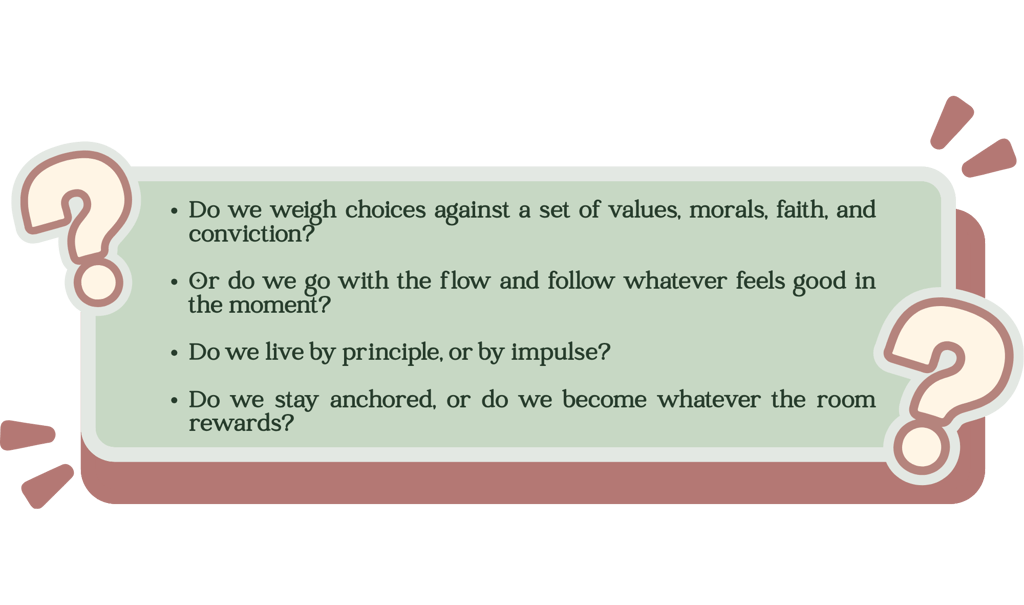
Because we all have to choose something to guide our decisions:


Let’s talk about aspiration for a second.
Wanting more isn’t the problem.
Wanting stability isn’t the problem.
Wanting to build, grow, achieve, and change your life… that’s not automatically selfish. Sometimes it’s responsible. Sometimes it’s healing. Sometimes it’s the most obedient thing you can do with your life.
This is the moment where everything gets real.
Because when it’s just you, your choices mainly land
on you.
But when you have influence, leadership, a platform,
a team, a family, a community… your choices don’t
stay personal.
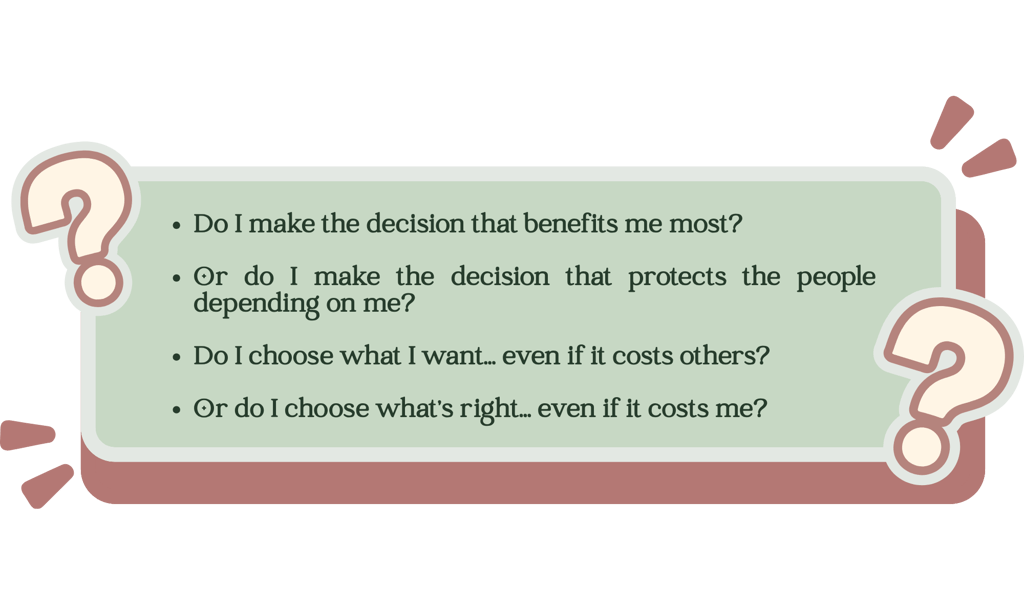
And that’s where the question shifts:


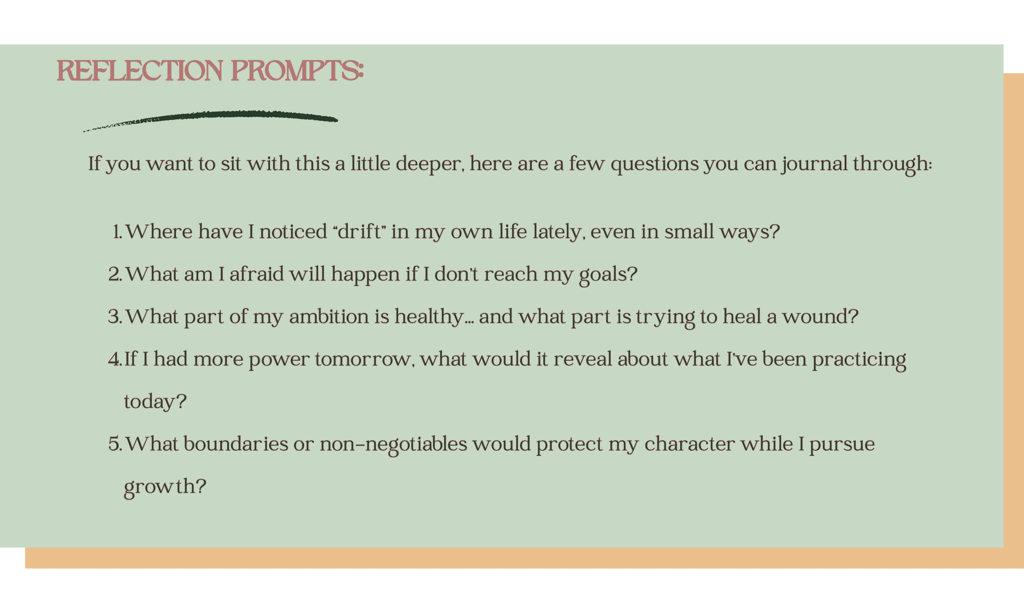
If you’re in a Wilderness Season right now where you’re trying to become better without becoming hardened, I invite you to explore my shop and see if one of the journals meets you right where you are.
I created the Wilderness Journey’s End journals to help us process through these kinds of inner questions
with faith, clarity, and small actionable steps. You can explore the journals in the shop and choose the one that
matches what you’re carrying right now.
Until Next Time,
Tori
If this topic makes you uncomfortable, you’re not alone.
But I also think discomfort can be a gift. It can be a warning light on the dashboard. It can be the moment you pull over and check your direction before you end up miles off course.
That’s not a small question. That’s the crossroads.
And it’s one of the reasons I think people “forget where they came from.” Because power can make your world smaller. You stop seeing people. You start seeing numbers. Outcomes. Wins. Losses. Optics.
You start calling harm “strategy.”
You start calling distance “boundaries.”
You start calling selfishness “standards.”
And you can convince yourself you’re still the same person… because you still believe you’re the hero of your own story.
So How Do We Pursue Success Without Losing
Ourselves?
I don’t have a neat answer, but I do have something I’m learning to hold onto:
Staying grounded has to be intentional.
Because drift is automatic.
So here are a few anchors I’m practicing (and honestly, I’m writing them as much for me as for you):
1) Decide your non-negotiables before the pressure hits.
When the moment comes, you won’t rise to your intentions. You’ll fall to your training. So write it down now:
What kind of person am I becoming?
What am I not willing to do to get what I want?
2) Pay attention to what you keep excusing.
The things we excuse today become the habits we normalize tomorrow.
3) Stay in rooms where you can be challenged.
If nobody can tell you “no,” your soul is in trouble. You need people who love you enough to check you.
4) Measure success by fruit, not just results.
Not just: “Did it work?”
But: “What did it produce in me?”
Peace or paranoia?
Compassion or coldness?
Integrity or image-management?
5) Keep returning to God, even when you’re winning.
Especially when you’re winning. Because success can make you forget you still need guidance.
For me, this is where faith stops being a “nice idea” and becomes the thing that keeps my heart from hardening.
But aspiration has a shadow side when it’s fueled by fear.
The fear of going back.
The fear of being overlooked.
The fear of not mattering.
The fear of being powerless again.
And when fear is the fuel, “success” can turn into a kind of desperation.
That’s when we start making choices we never thought we’d make.
Not because we’re evil.
Because we’re terrified.
And if we don’t name that fear, we’ll call it “drive” and let it run the whole show.
Power Reveals What We’ve Been Practicing
Here’s another thought that won’t leave me alone:
Power doesn’t always change us.
Sometimes it reveals us.
Power just gives you more room to do what you’ve already been rehearsing in smaller ways.
If I practice humility when I have little, I’m more likely to carry humility when I have more.
If I practice entitlement when I have little, I’m more likely to become unbearable when I have more.
If I practice “my needs first” in every small decision, then when I’m leading others, I’m going to keep putting myself first… just with bigger consequences.
That’s why intentions matter, yes.
But so does practice.
Who are we practicing being on the way to what we want and who we want to Become?
When Your Decisions Affect More Than Just You
And please hear me: I’m not asking this from a place of perfection. I’m asking it from the middle of real life, where emotions are loud and motives can be mixed.
Sometimes what “feels good” is peace.
And sometimes what “feels good” is control.
Sometimes what “feels good” is rest.
And sometimes what “feels good” is revenge wearing a cute outfit.
So if our only compass is “How do I feel right now?” we’re going to call a lot of things “right” that are really just
“relieving” what “feels good” in the moment.
The Hunger to Become Better Can Turn Into a Fear of Becoming Small Again